
how-to
How to Prepare a Beach House for Hurricane Season
November 8, 2026 · 6 min read
Last Updated: November 7, 2026
Quick Summary
To prepare a beach house for hurricane season, inspect the roof, windows, and seals months before the first named storm, clear gutters, trim trees, secure loose outdoor items, and photograph every room for your property damage record. Confirm your flood insurance coverage, since standard homeowners policies often exclude rising water.
- Hurricane season runs June through November, so start property checks months before the first named storm forms.
- Full gutters push water into the roof edge and walls, so clear gutters and downspouts before the season.
- Storm surge is the leading cause of coastal flooding and the risk beach house owners underestimate most.
- Build a hurricane guest communication plan covering the pre-season, watch, warning, and after-storm phases.
- Absentee owners need someone on the ground to secure the property, document conditions, and talk to guests.
Table of Contents
- Your Hurricane Preparedness Checklist for Homeowners
- How to Protect a Beach House from Storm Surge
- Vacation Rental Hurricane Preparedness and Your Guest Communication Plan
- Frequently Asked Questions
Your Hurricane Preparedness Checklist for Homeowners
Learning how to prepare a beach house for hurricane season starts with one habit: walk the property like an inspector, not an owner. Hurricane season runs June through November, and the coastal home that survives it is usually the one whose roof, windows, and seals were checked months earlier. That early inspection also gives you time to adapt hurricane preparedness tips to the needs of older residents, whose safety may depend on accessible shelter and a reliable plan for getting there.
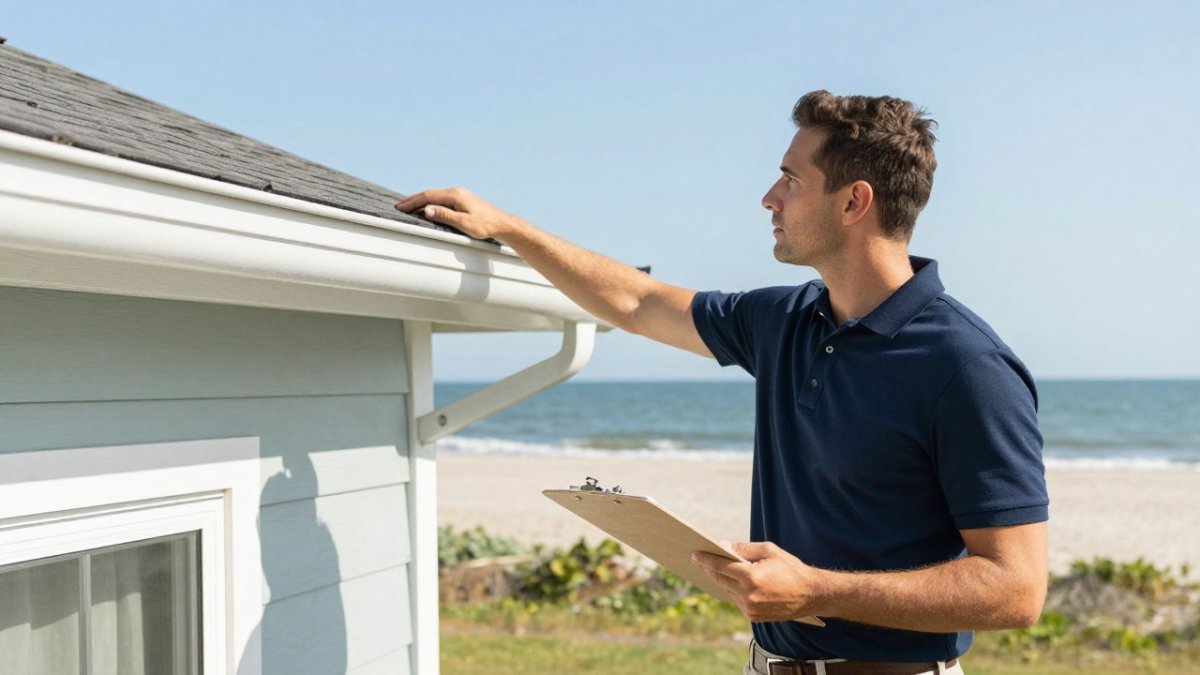
Work through these steps before the first named storm forms:
- Inspect the roof for loose materials, lifted shingles, and worn flashing.
- Check windows and doors, test locks, look for cracked glass, confirm shutters are labeled.
- Seal gaps by re-caulking windows, doors, and utility penetrations.
- Clear gutters and downspouts, full gutters push water into the roof edge and walls.
- Trim trees and remove overhanging branches that can become projectiles.
- Secure loose items, store outdoor furniture, grills, and planters in the garage.
- Service the HVAC system and know how to shut off utilities.
- Build an emergency kit: water, batteries, medications, documents, and valuables in waterproof storage.
- Review insurance and photograph every room for your property damage record.
A common mistake is skipping the small stuff, loose caulk and one clogged downspout cause more interior water damage than most owners expect. For seasonal prep, see our guide to preparing your vacation home for peak winter season.
How to Protect a Beach House from Storm Surge
Storm surge is the leading cause of coastal flooding, and it is the risk beach house owners underestimate most. You cannot stop surge, but you can reduce what it destroys.
Start outside: elevate or store ground-level items, anchor anything that floats, and know your flood risk zone. Confirm your flood insurance coverage with your insurer, since standard homeowners policies often exclude rising water. Inside, move valuables and electronics above expected water lines, and unplug appliances and shut off utilities if evacuation is ordered.
Timing matters. Southwest Florida's storm season overlaps with the dry season that draws most guests, so plan protection windows around your booking calendar. Our guide to the best time to visit Southwest Florida explains how the seasons shape both risk and rental demand.
Vacation Rental Hurricane Preparedness and Your Guest Communication Plan
Vacation rental hurricane preparedness lives or dies on communication. Guests forgive a storm. They do not forgive silence.
Build a hurricane guest communication plan before the season starts:
- Pre-season message: share your cancellation and rebooking policy in plain language.
- Watch phase: alert upcoming guests that you are monitoring the forecast.
- Warning phase: confirm evacuation guidance and offer rebooking options.
- After the storm: update guests on property status before they ask.
For absentee owners, remote coordination is the hard part. You need someone on the ground to secure the property, document conditions, and talk to guests while you are out of state. That is the gap we fill at GCLuxuryRentals. Our team handles guest messaging, cleaning, and maintenance, and our founder, Airbnb Superhost Ambassador Elizabeth Claunch, works on revenue planning for the properties we manage. Owners in Fort Myers can explore our co-hosting and management services, while Cape Coral owners get help with pool and canal-home upkeep and Marco Island owners get full guest care and maintenance support.
Watch out: promising refunds you have not confirmed with your insurer or platform can cost you more than the storm.
| Storm Phase | Owner Action | Guest Action |
|---|---|---|
| Pre-season | Review insurance, document property | Receive policy summary |
| Watch | Confirm supplies and contacts | Get monitoring alert |
| Warning | Secure property, follow evacuation orders | Receive rebooking options |
| After | Inspect and photograph damage | Get status update |
Hurricane season rewards owners who plan early and have trusted people on the ground. If you own a luxury rental and cannot be there when a storm forms, GCLuxuryRentals can carry the checklist for you, with white-glove management, five-star guest care, and pricing strategies that keep your calendar full. Get started with GCLuxuryRentals and protect both your property and your peak-season revenue.
Frequently Asked Questions
What is the worst month for hurricane season?
In the Atlantic basin, hurricane activity typically peaks from mid-August through October, with early to mid-September usually the most active stretch. That means a beach house should be fully prepared before August arrives, not during the first named storm. Owners who wait until a watch is issued often find shutters sold out, contractors booked, and supply shelves empty. Aim to complete your hurricane season prep by late July so the property is ready well ahead of peak activity.
Should you crack open windows during a hurricane?
No. Opening windows during a hurricane does not equalize pressure and does not save the roof. It lets wind-driven rain inside, can pull interior pressure in ways that damage walls, and creates a dangerous projectile path if glass shatters. The safer approach is to keep windows closed and protected with storm shutters, impact-rated coverings, or properly installed plywood. Seal gaps around frames with caulk before the season starts so water intrusion is less likely even in heavy rain.
How should owners communicate hurricane plans to guests?
Build a written hurricane guest communication plan before the season starts. Include a pre-season note explaining the property's storm policy, a forecast-trigger message with safety guidance and evacuation resources, and a clear cancellation or rebooking path. For a vacation rental, hurricane preparedness also means confirming who contacts guests, when, and through which channel. Remote owners should delegate this to a property manager who can send updates, coordinate early checkouts, and document the property's condition before and after the storm.

Planning a week?
Tell us your dates and group and we'll find the right home.